
What happens to us during a busy scientific conference? How much do we walk? How well do we sleep? Are we stressed? And can smartphones capture these patterns without requiring participants to continuously interact with a research study?
These are some of the questions behind UbiLife, an ongoing mobile sensing study conducted at the ACM UbiComp/ISWC conference series.
UbiLife has two closely related goals. First, we want to study the behavior and experiences of people attending a large international scientific conference. Second, we use the study as a real-world test of modern mobile sensing technology: What can we actually collect from participants’ own smartphones, how complete is the resulting data, and what are the practical challenges of conducting this kind of study at scale?
The first UbiLife study was conducted at UbiComp/ISWC 2025 in Espoo, Finland. In October 2026, we are running UbiLife again at UbiComp/ISWC 2026 in Shanghai, China.
Mobile sensing and CARP
Mobile sensing uses smartphones, wearables, and other connected devices to collect information about people’s behavior and context as they go about their everyday lives. This approach is increasingly used in research on digital phenotyping, health, wellbeing, mobility, and human behavior.
UbiLife is built using the Copenhagen Research Platform (CARP) and, in particular, the CARP Mobile Sensing (CAMS) framework as implemented in the CARP Studies app. CARP is an open-source platform developed at the Technical University of Denmark (DTU) for designing and running mobile and wearable sensing studies.
In UbiLife, participants install the CARP Study app on their own smartphone. The study protocol specifies what should be measured and when. During the 2025 study, this included passive smartphone sensing such as step count, activity recognition, location, and ambient light; information about the phone such as battery state and screen events; contextual information such as weather and air quality; and active self-reports about stress, sleep, wellbeing, personality, and conference events.
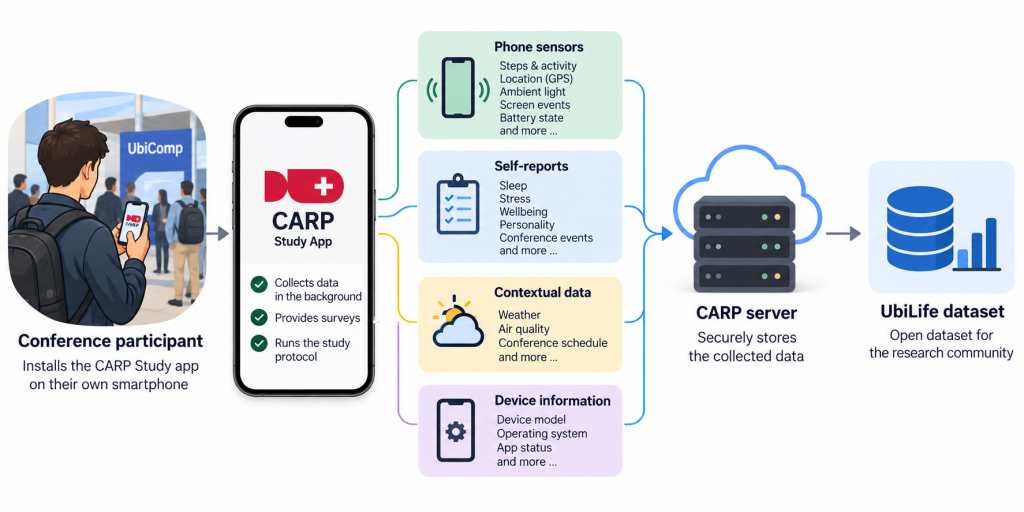
Figure 1 – The UbiLife study combines passive smartphone sensing with self-reports and contextual information using the CARP Studies app. Data are securely uploaded to the CARP server and subsequently prepared as the UbiLife research dataset.
UbiLife 2025 – Espoo, Finland
The first UbiLife deployment took place at UbiComp/ISWC 2025 at Aalto University in Espoo, Finland.
A total of 82 conference participants joined the study. Participants used their own smartphones, and participation was anonymous, using a unique QR code during onboarding. The participants represented a mixture of students, researchers, postdocs, and professors, with a median age of 30 years. More than half were attending UbiComp for the first time.
Together, the participants generated more than one million records across 15 different data streams during the study. These ranged from hundreds of thousands of step-count and activity observations to daily surveys about sleep and stress.
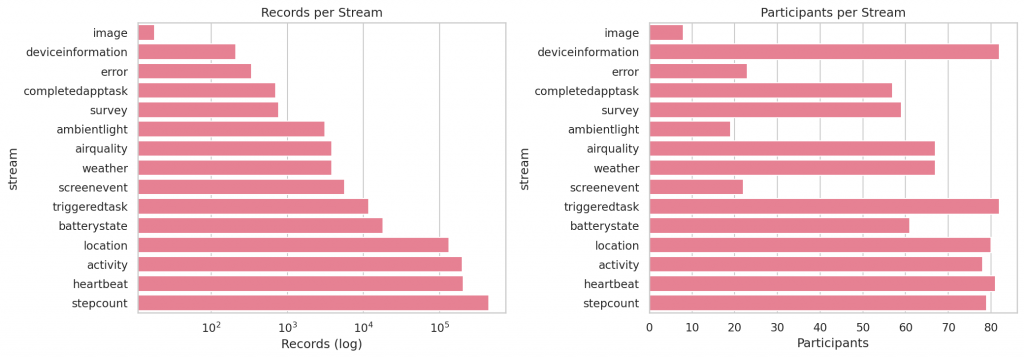
Figure 2 – The UbiLife 2025 dataset contains more than one million observations from smartphone sensors, contextual data, and self-reports. The figure shows both the amount of data collected and the number of participants contributing to each data stream.
What did we observe at UbiComp 2025?
While the main purpose of UbiLife is to create a reusable mobile sensing dataset and study mobile sensing methodology itself, the 2025 data also provide an interesting glimpse into life at a scientific conference.
A conference has its own daily rhythm. Smartphone activity recognition reveals a clear daily pattern. Walking increases strongly during conference hours, approximately 09:00–18:00, corresponding to sessions, coffee breaks, networking, and moving around the conference venue. During the night, activity is – as one would hope – dominated by periods classified as “still”.
The data also reveal commuting to and from the conference venue in Espoo, which was located outside Helsinki city center.
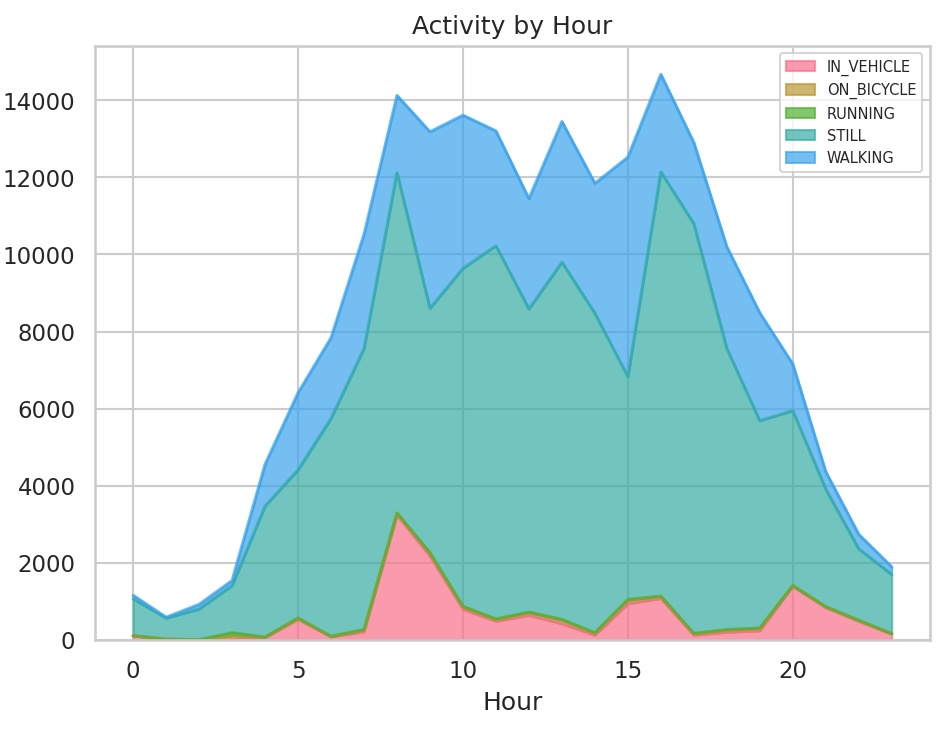
Figure 3 – Life at UbiComp has a clear daily rhythm. Walking increases sharply during the conference day, while nighttime is dominated by periods of inactivity.
Sleeping well – but perhaps not enough. The self-reports revealed another interesting pattern.
When asked about sleep quality, most participants were reasonably positive: 53% rated their sleep as “Good”, 23% as “Neutral”, and only 20% as “Bad” or “Very Bad”. But reported sleep duration tells a somewhat different story. A substantial 44% of the responses indicated less than six hours of sleep per night, while only 7% reported more than eight hours. So conference participants may feel that they sleep reasonably well – even when they do not necessarily sleep very much.
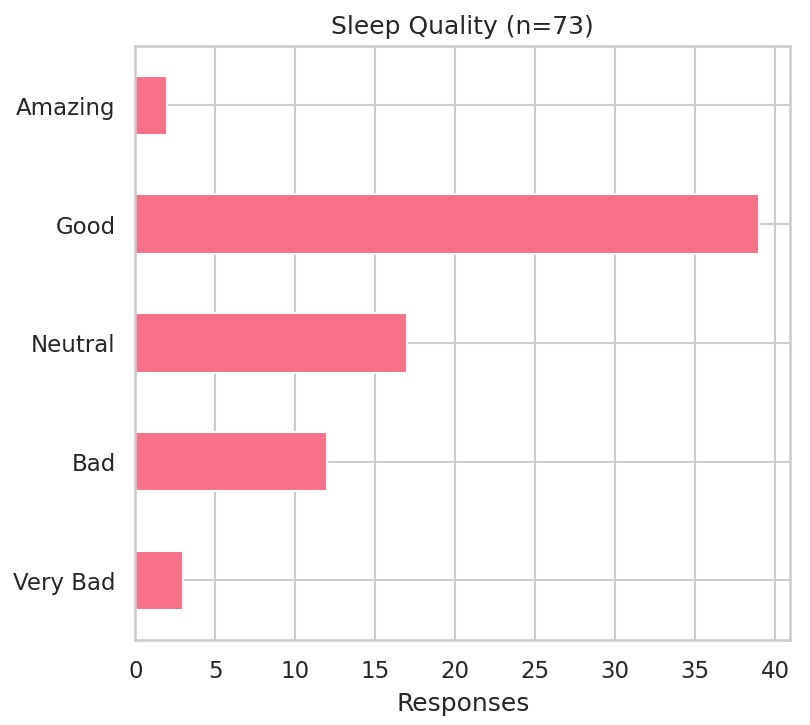
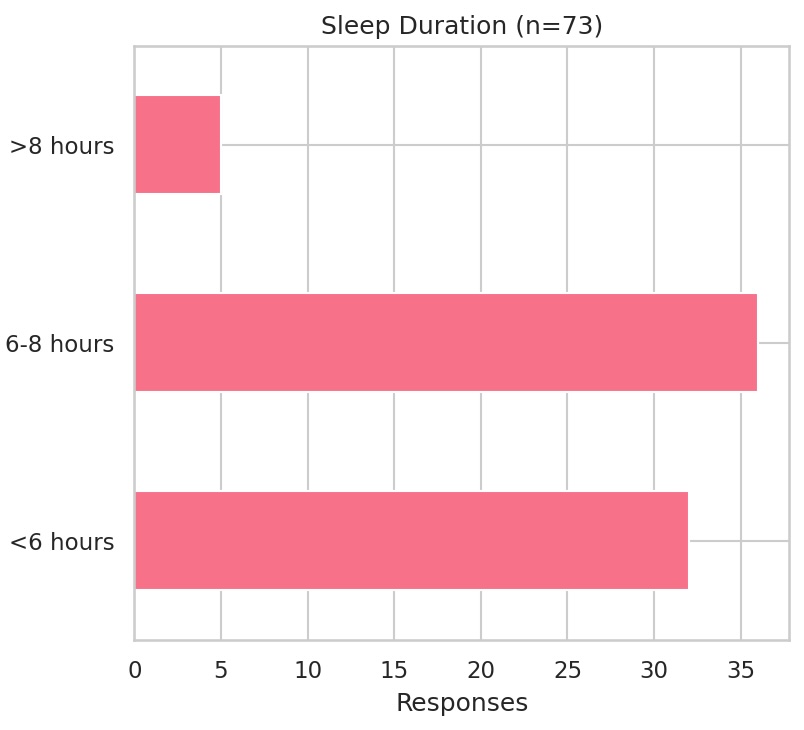
Figure 4 – How do UbiComp participants sleep? Most participants rated their sleep positively, although 44% of the responses indicated less than six hours of sleep per night.
What about stress?
Conferences can also be intense environments: presenting work, meeting colleagues, networking, travelling, and trying to attend many sessions within a few days.
Participants were therefore asked each day to rate their stress on a scale from 0 to 10. Across 81 responses from 36 participants, the median reported stress level was 4, suggesting moderate rather than very high levels of perceived stress.
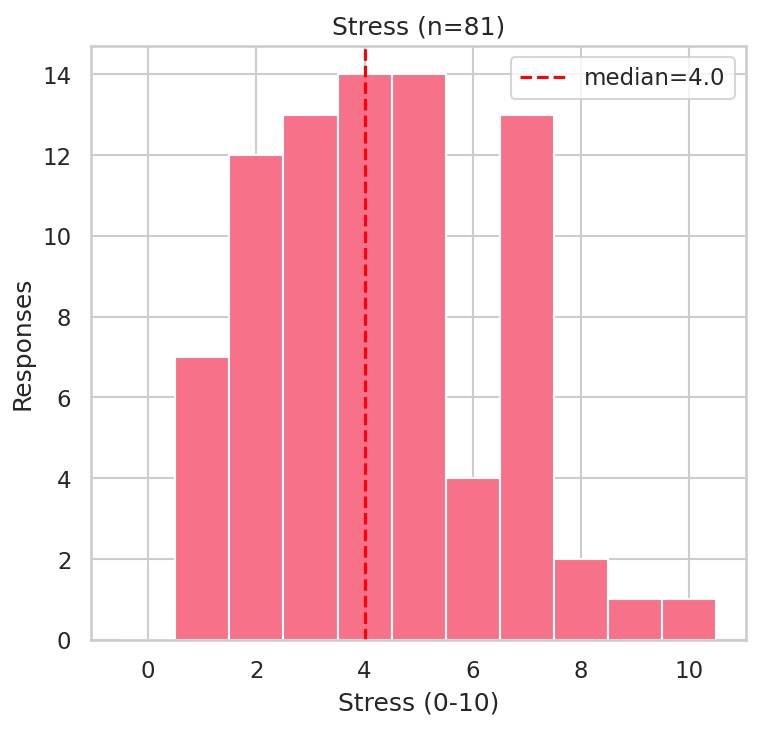
Figure 5 – Self-reported daily stress during UbiComp 2025. Across 81 responses, the median stress level was 4 on a 0–10 scale.
Mobile sensing in the real world is difficult
UbiLife is not only about studying conference participants. It is also an experiment in conducting mobile sensing research under realistic conditions.
And the 2025 study reminded us that this is difficult. Phones differ, operating systems restrict background applications, participants charge and use their devices differently, network connectivity changes, and apps sometimes simply stop running.
We used a small “heartbeat” signal generated by the CARP Study app every five minutes to investigate “coverage“, i.e., if the app was running and the phone actively collecting data. The resulting picture shows considerable variation between participants and across the conference week. Mean coverage during the main conference period was only 34.7%, illustrating how difficult continuous background sensing has become on modern smartphones.
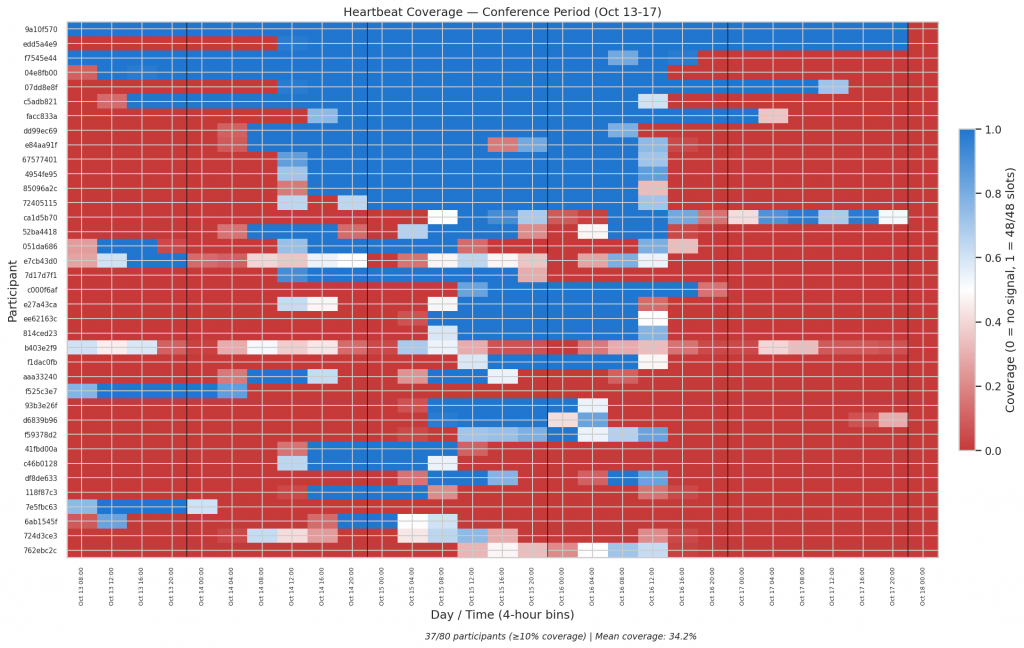
Figure 6 – Real-world mobile sensing is rarely complete. Each row represents one participant, while the colors indicate periods with and without heartbeat signals from the CARP Study app during the conference.
The study also taught us that technology is only part of the challenge. Participant behavior matters as well. Charging habits, app usage, and engagement all influence what data are collected.
Recruiting participants was another challenge. Although UbiComp/ISWC 2025 had more than 600 attendees, we enrolled just over 80 participants despite dedicated on-site recruitment, QR-based onboarding, and an anonymous, low-effort study design.
Our experience suggests that simply making participation easy is not necessarily enough. Participants at a conference are busy and have many competing demands on their attention. Providing a clear value for participants and integrating sensing into applications that people actually want to use may therefore be important for future mobile sensing studies.
These experiences are an important part of UbiLife. We are interested not only in what sensor data can tell us about human behavior, but also in understanding how mobile sensing studies actually work – or fail to work – outside the laboratory.
UbiLife continues – Shanghai 2026
In 2026, we are doing it again.
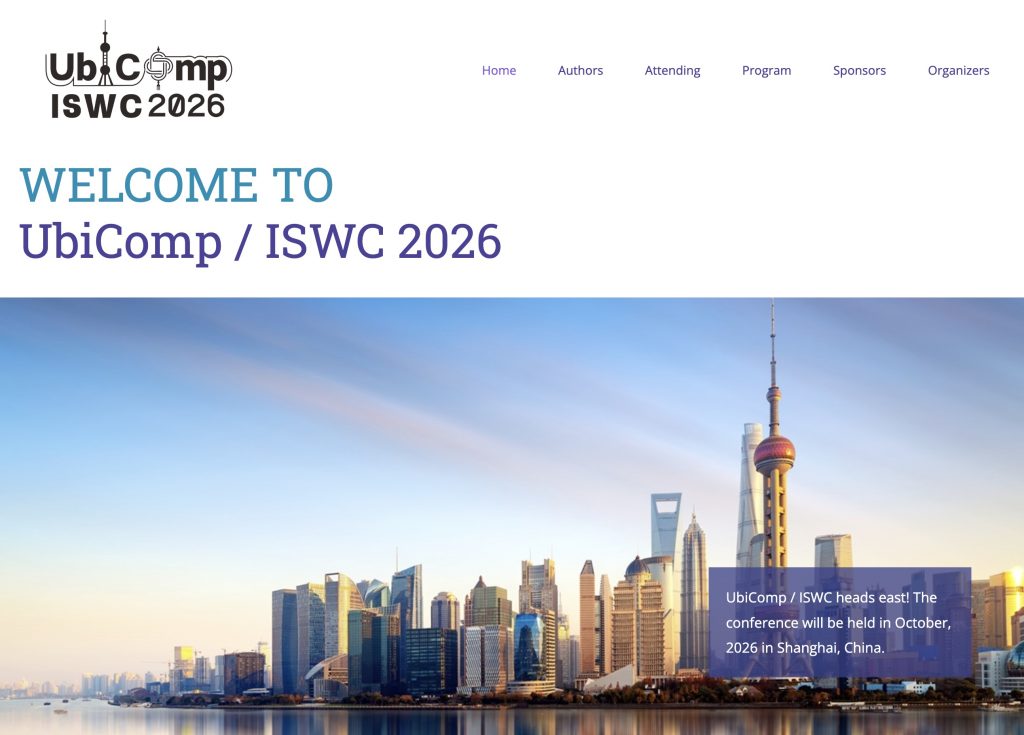
The next UbiLife deployment takes place at UbiComp/ISWC 2026 in Shanghai, China, in October 2026.
The first goal is to repeat the same experiment and increase the dataset. By running UbiLife at successive UbiComp conferences, we hope to gradually create a dataset that makes it possible to compare conference life across years, locations, participant populations, and generations of mobile technology. The second goal is to integrate the CARP sensing framework with the AWARE sensing framework for the Apple Watch to collect more fine-grained behavioral data from Apple users. This second goal is to demonstrate how different software frameworks for mobile & wearable sensing can be integrated.
Ultimately, our ambition is for UbiLife to become a community resource for research and education in mobile sensing, digital phenotyping, and ubiquitous computing.
Resources & References
The UbiLife 2025 dataset is openly available on Zenodo: https://zenodo.org/records/19220274.
- Bardram, J. E., Sjölin Grech, N. & Havlik, M. “UbiComp 2025 Mobile Sensing Dataset (UbiLife Study).” Zenodo, 2026. DOI: 10.5281/zenodo.19220274
The accompanying data processing and analysis code is also openly available on GitHub: https://github.com/dtu-digital-health/UbiLife.
The release contains both the original data in the CARP data format and cleaned and structured data files in Parquet format. The processed dataset contains separate files for the different sensor and survey data streams together with consistent metadata and documentation.
This paper describes the CARP demonstration at UbiComp/ISWC 2025, within which the first UbiLife study was conducted:
- Bardram, J. E. & Sjölin Grech, N. “The CARP Mobile Sensing Framework – Demonstration.” Companion of the 2025 ACM International Joint Conference on Pervasive and Ubiquitous Computing (UbiComp Companion ’25), pp. 434–438.
This article provides a detailed description and analysis of the 2025 UbiLife study, the resulting dataset, exploratory analyses of conference life, and lessons learned from the deployment:
- Bardram, J. E., Havlik, M. & Sjölin Grech, N. “Sensing UbiComp: A Real-World Mobile Sensing Study and Open Dataset from a Scientific Conference.” IEEE Pervasive Computing, under review.
This paper describes the architecture and concepts behind the CARP Mobile Sensing framework used for UbiLife.
- Bardram, J. E. “The CARP Mobile Sensing Framework – A Cross-platform, Reactive, Programming Framework and Runtime Environment for Digital Phenotyping.” arXiv:2006.11904, 2020.