
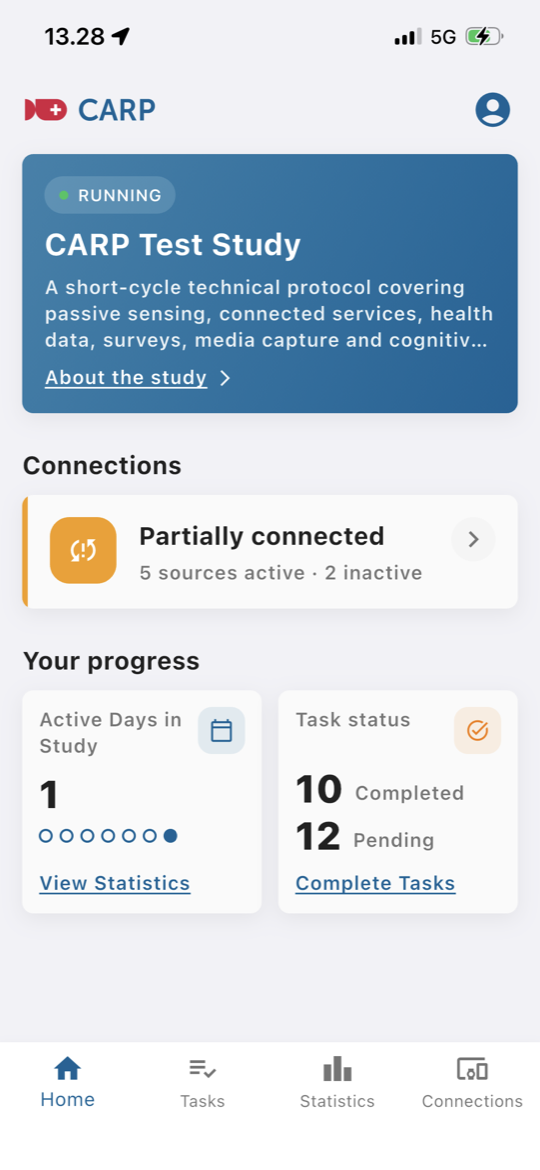
The CARP Studies app has been rebuilt from the ground up. Version 5 is out now for Android and iOS, with a new design, easier sign-in, and data collection that keeps running in the background. If you are new to the app, this post explains what it is, who it is for, and what it can collect.
What is the CARP Studies app?
CARP Studies is the participant app of the Copenhagen Research Platform (CARP), developed at DTU Health Tech. Researchers design a study in the CARP web portal. Participants install the app, join the study, and the app does the rest: it collects data from the phone and connected wearables in the background, and reminds participants when a survey, cognitive test, or other task is due. Data is uploaded securely to the CARP server at DTU, where researchers can follow the study and download the data.
Who can use it?
- Researchers running digital health or digital phenotyping studies. Studies where DTU Health Tech is a research partner can use the CARP-hosted service at DTU. Teams that need to keep data in-house can run their own CARP server, as described in Three Ways to Use CARP for Your Research.
- Participants invited to a CARP study. The invitation comes by email, or as a QR code or short code handed out at a clinic or an event, so joining takes a few seconds.
- Developers: the app is open source (MIT) on GitHub; contributions are welcome!
Why use CARP Studies?
- No app to build. Researchers configure a study protocol; participants download a ready-made app from the App Store or Google Play.
- Easy for participants. Guided onboarding with informed consent, and one home screen showing the study status, what is connected, and what to do next.
- Built for large studies. One protocol serves any number of participants. Invite and monitor them from the web portal, and give different participants different roles, for example, a parent and a child phone in the same study.
- Passive and active data in one app. Sensor and wearable data are collected automatically, next to surveys, cognitive tests, audio, photos and video.
- Participants see their own data. Weekly cards show steps, heart rate, sleep, mobility and task progress.
- Android and iOS, in English, Danish and Spanish.
What’s new in version 5
- A redesigned app: new home, tasks, statistics, study details and connections pages.
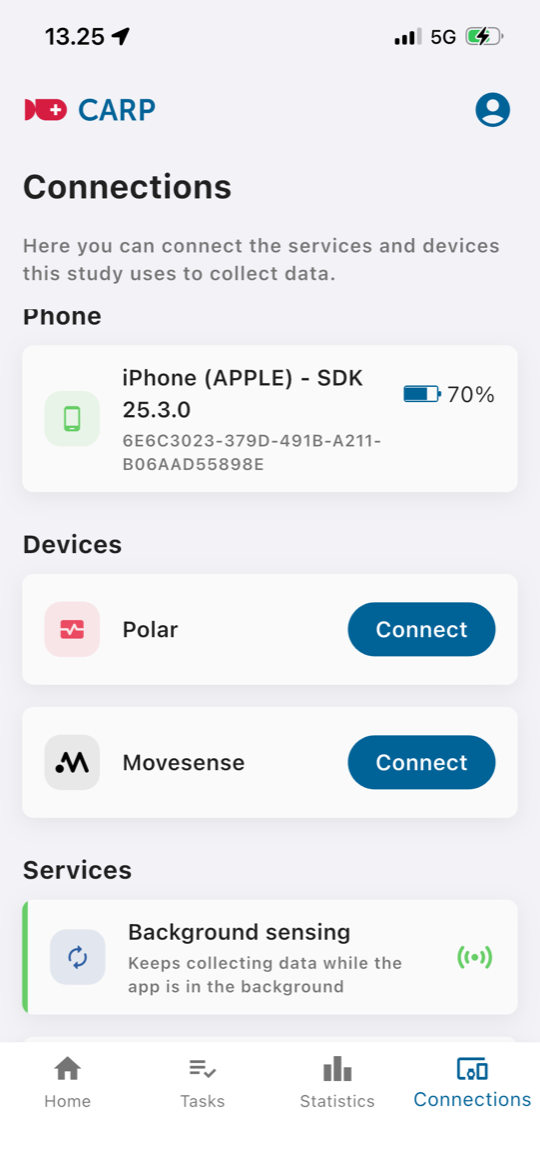
- Background sensing: data collection continues while the app is in the background (Android foreground service, iOS “Always” location).
- Sign in by scanning a QR code or typing a short code, next to the usual email invitation.
- Statistics cards fill in from the server, including new heart rate and sleep cards. Sleep is counted from bedtime to wake-up, with deep, light, REM, and awake time.
- Informed consent can be downloaded as a PDF.
- Study announcements appear on the home screen with a notification, and tapping the notification opens the announcement.
What data can it collect?
Each study decides what to collect, and the informed consent tells participants exactly what and why. The phone asks for permission for each type of data, and participants can connect or disconnect devices and services in the app. This is what the app can collect today:
| Data | Permission asked | Examples |
|---|---|---|
| Location and mobility | Location (also “all the time” for background) | Places visited, time spent at home, distance travelled |
| Physical activity | Physical activity | Walking, running, cycling, being still |
| Health data | Health Connect (Android) / Apple Health (iOS) | Steps, distance, heart rate, sleep and sleep stages, skin temperature |
| Wearables | Wearable devices (Bluetooth) | Heart rate and ECG from Polar and Movesense sensors. |
| Sound | Microphone | Noise level, audio recordings such as speech or coughing |
| Photos and video | Camera | Pictures or videos taken as part of a task |
| Environment | Location | Local weather and air quality |
| Phone | None | Battery level, screen on/off, network connectivity |
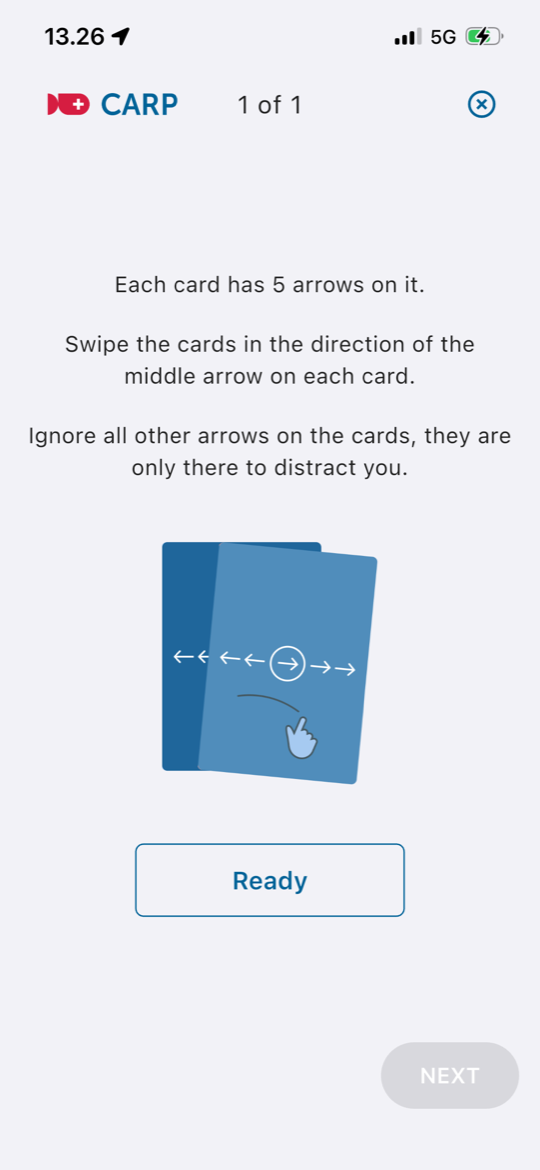
| Surveys and tests | None | Questionnaires, diaries and cognitive tests such as the Flanker test |
The app also asks for permission to send notifications (task reminders and announcements) and, on Android, to be excluded from battery optimisation so data keeps being collected in the background.
What’s coming
The health integration can read much more than the app uses today.
Through Google Health Connect and Apple Health, future studies will be able to collect data such as blood pressure, blood glucose, blood oxygen, heart rate variability, weight and body composition, respiratory rate, and ECG from the Apple Watch. New sensors and wearables are added as plug-in sampling packages in CARP Mobile Sensing, so the list keeps growing.
Through the CARP Gardener framework, future studies will be able to collect health and activity data from Garmin, Fitbit, Withings, Dexcom, and any other service providing an open-access web API.
Data management and privacy
- For the hosted service, DTU is the data controller and data is handled according to the GDPR and the Danish Data Protection Act.
- Data is stored on DTU servers at Computerome, the Danish National Life Science Supercomputing Center, in Denmark.
- On the phone, data is pseudonymised and only kept until it is uploaded. All communication with the server is encrypted, and data is encrypted on the server.
- The service is only used for research. Participants are informed before any data is collected, and can leave a study at any time from the app and ask for their data to be deleted.
Read more in Hosting at DTU and the Privacy Policy for the CARP Study Apps.
Get the app
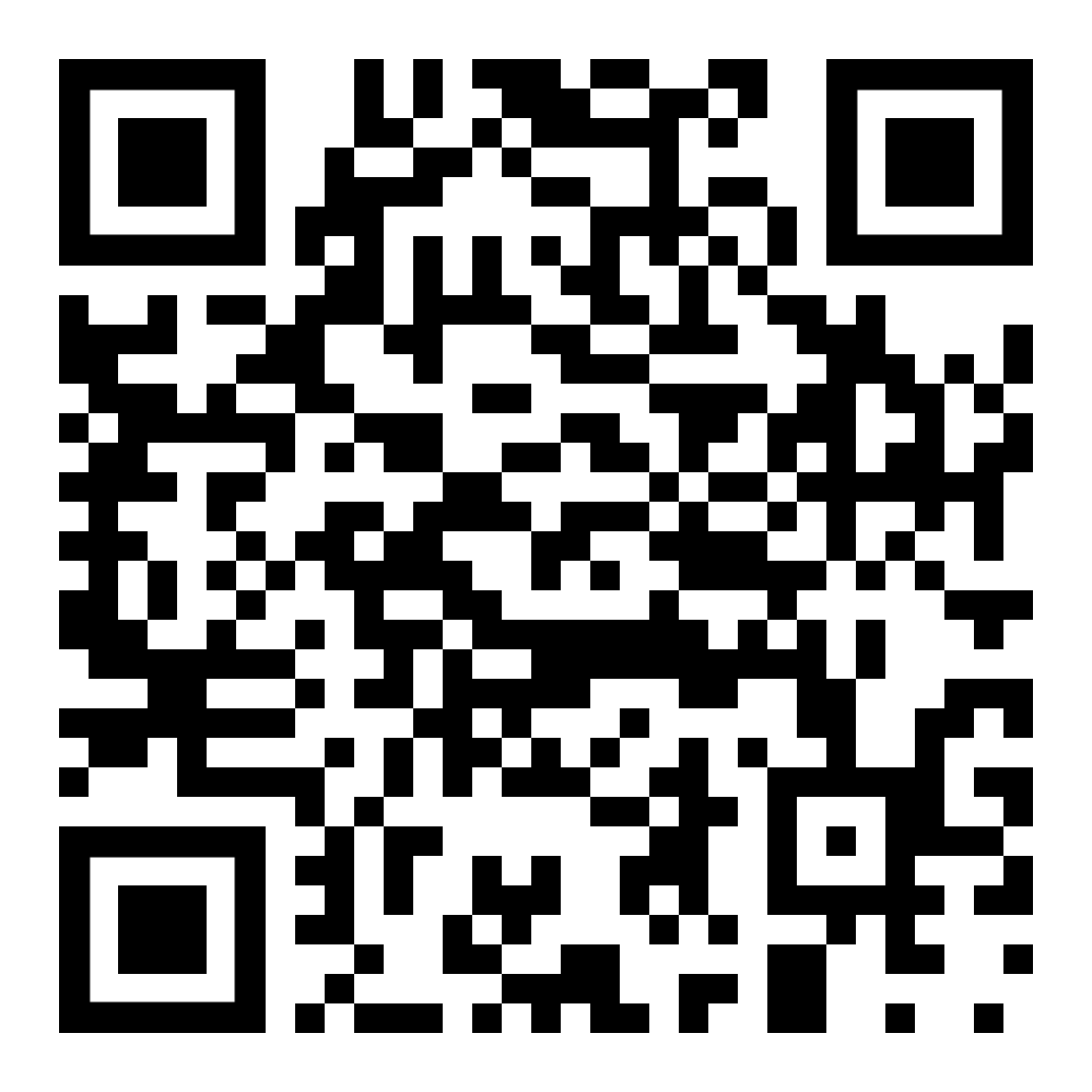
Scan the QR code or tap the button for your phone:
Getting started
- Participants: see the CARP Studies App Tutorial for a step-by-step walkthrough of joining a study.
- Researchers: read Three Ways to Use CARP for Your Research and contact the CARP team at info@carp.dk to set up a study.